Skip to content

Groupage Transport

Part-load freight consolidates your small and medium shipments by road (LTL), sea (LCL) and air. You pay only for the space you occupy and benefit from regular departure schedules, with Konsol Logistics planning each step.

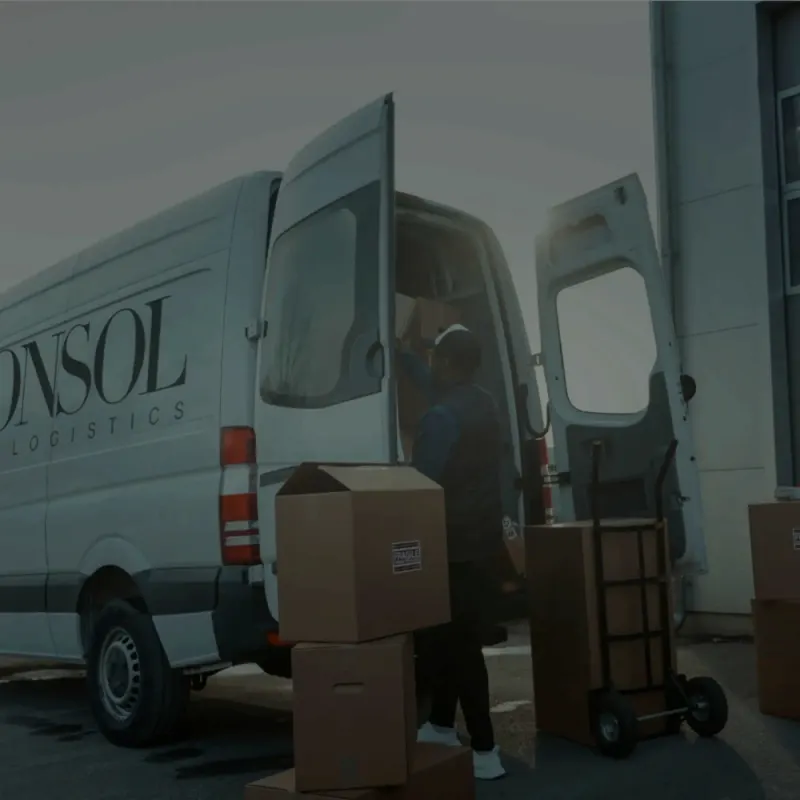
Pallets from different customers being loaded onto a shared truck for part-load freight

Part-load freight means cargo that does not fill a truck or container on its own is combined with other cargo heading the same way; it appears as LTL by road, LCL by sea and consolidated cargo by air. Konsol Logistics, based in Konya, picks the right mode for your small and medium shipments, follows the cargo from packing and labelling through to delivery, and sets things up so you pay only for the space you occupy.

Service Features

  • Road (LTL), sea (LCL) and air part-load options
  • Pay only for the space you occupy
  • Planned shipments on regular departure schedules
  • Guidance on pallets, packaging and labelling
  • Operational support in customs procedures
  • Cargo tracking and regular updates
  • Comparative quotes for moving up to FTL or FCL

What is part-load freight and how is cargo combined?

If one customer's cargo does not fill a truck, a container or a hold, paying for the empty space is both costly and wasteful. In part load, the cargo of several customers on the same route is collected, placed in a shared vehicle or container, separated again at the destination, and each consignment is delivered to its own consignee. Because cost is shared by the volume and weight you occupy, small shipments find a more reasonable balance.

The unseen hero of this system is a terminal or warehouse, where cargo is gathered, checked, consolidated and sent on its way. Each stage means a little waiting and handling. In other words, consolidated carriage can be cheaper, and in return it asks for good packaging and a little flexibility. We describe that balance honestly below.

Konsol Logistics takes on the planning and coordination side of this chain: which departure and which vehicle or container your cargo goes into, how the paperwork is prepared and how you are kept informed during delivery are worked out with you. Thanks to our agent network and international logistics experience, the separation and delivery steps at the destination are part of the plan.

Part load by road, sea and air: three modes, three logics

Konsol Logistics offers this service in every transport mode, but the logic of the calculation changes with the mode.

Road part load (LTL)

Cargo of different customers on the same route is brought together; on lanes to Europe, the Turkic Republics, the Middle East and the Gulf, work follows a regular departure schedule. Charges are generally based on pallet count, dimensions and weight, and pallet height and stackability affect the calculation too. Planning the loading date around the schedule makes things easier; if a departure day is missed, the cargo may roll to the next programme.

Sea part load (LCL)

Shipments that do not fill a container travel in a shared one. Freight is calculated on the greater of volume and weight, the W/M logic; cargo is gathered at the port of loading and separated at the port of discharge. Keeping to the booking and cut-off dates matters, because late cargo waits for the next sailing. As your cargo will sit beside others in the container, sound packaging and labels also ease separation at the destination. Our partner network spanning 93 countries helps on these lanes, and the LCL Tariffs page on our website shows current port, freight and transit information.

Air part load

This is the consolidated air cargo option for small but urgent cargo. The charge is set by the greater of actual weight and volumetric weight; under the common standard, volumetric weight in kilograms is the carton dimensions in centimetres multiplied together and divided by 6000. For light but bulky cartons this can surprise: even if actual weight is low, a large carton is charged at its volumetric weight. Shrinking the packaging is therefore one way to cut cost.

Advantages and limits of part load

Part load does not suit every cargo, and that is worth saying up front. The table gives a general comparison with a full truck or full container.

CriterionPart load (LTL / LCL)Full truck or container (FTL / FCL)
Payment logicYour share of the space you occupyThe whole vehicle or container
FlexibilityTied to the departure schedule; easy to access for small cargoDate and route built around the cargo
HandlingCollection, consolidation and separation stepsDirect loading and direct delivery
Delivery timeCan vary with how consignments are combinedMore predictable
Damage riskPackaging decides, because handling increasesLess handling
Suitable cargoSmall and medium lots, regular shipmentsLarge lots, sensitive and high-value cargo

In short, part load lowers cost on small volumes and, thanks to its departure schedule, sends cargo off without much waiting. On the other hand, remember there can be transfer and waiting steps, and delivery time takes shape alongside other cargo.

Expert note: In consolidated carriage, delivery time depends not only on the departure date but on when the cargo comes together at the terminal. If you have a firm deadline, say so at the enquiry stage; if needed, a full truck or full container will be proposed.

Who is part-load freight right for?

Used in the right place, this method eases both cost and stock flow. These are the four situations we meet most often.

Small and medium-sized exporters

For producers that cannot fill a truck with every order, part load makes it possible to start exporting with small lots and a reasonable budget. As orders grow, switching models is not hard.

Regular but small shipments

In flows such as weekly replenishment, spare parts or retail distribution, waiting to fill a vehicle raises stock cost. A part-load service built on a regular departure schedule fits this kind of flow better.

Samples, first orders and new-market trials

When you ship to a new country for the first time, you do not want to take a big risk. Testing both the market and the route with a small load lets you plan later shipments on firmer ground.

Multi-consignee and split deliveries

If you send small lots to several consignees in the same area, planning part loads is often simpler than gathering everything on one full truck. Settling each consignee's delivery address and receiving conditions in advance cuts lost time at unloading.

How to prepare part-load cargo: pallets, packaging and labelling

Your cargo will be handled several times on the way and will sit next to other cargo. Packaging is therefore not a detail but the safety of the shipment.

  • Put the cargo on a sturdy, standard-sized pallet and leave no carton overhanging the edge.
  • Secure it with stretch film and, if needed, strapping, and protect the edges with corner boards.
  • Write the consignee's name, address, piece count and handling marks visibly on every carton and pallet.
  • Mark fragile, non-stackable or this-way-up cargo clearly.
  • Weigh and measure pallets and cartons; if the quoted size differs from the real one, the charge can change.
  • If you use wooden pallets or packaging, check whether an ISPM 15 mark is required.
  • Notify any dangerous goods in advance; ADR, IMDG and IATA DGR rules differ by mode.
  • Prepare the commercial invoice and packing list so they match the cargo exactly.

Expert note: Do not report dimensions as “approximate”. A difference found on the scale on loading day can mean a change in the charge or cargo that no longer fits the same vehicle. A few minutes of measuring prevents all of that correspondence.

Part-load shipment step by step, from request to delivery

The process runs roughly as follows; details vary with the mode and the lane.

  1. Request and quote. In the Quick Quote form you enter the cargo type, the number of pallets or cartons, dimensions and weight, and the loading and delivery addresses; the form checks the details and prepares a ready-made WhatsApp message, which you send yourself.
  2. Mode and departure selection. Depending on urgency, LTL, LCL or air part load is chosen and a suitable departure schedule is identified.
  3. Collection and loading. The cargo is collected on the agreed day or brought to the terminal; packaging and labels are checked.
  4. Consolidation and paperwork. The cargo is combined with other loads; the commercial invoice, packing list and the transport document for the mode (CMR, B/L or AWB) are prepared.
  5. Customs and tracking. Operational support is given in customs procedures, and you are told the cargo's status at regular intervals.
  6. Separation and delivery. At arrival the loads are separated and delivered to the consignee; any damage or shortage is recorded in a report at unloading.

When should you move to a full truck or full container?

Part load is not the right answer for every cargo; past a certain point it can even cost more than full carriage. These signs show it is time to move to FTL or FCL.

  • Your cargo fills most of the vehicle or container, and the share you pay is close to a full allocation.
  • The delivery date is fixed and you cannot leave a margin for transfers or waiting.
  • The cargo is very delicate, valuable or needs special conditions, and you want less handling.
  • Direct delivery to a single consignee is required.
  • Your shipping frequency has grown and regular full departures have become plannable.

Expert note: Take the decision to switch by looking at several shipments together, not a single one. If the combined volume of the small loads you send back to back already fills a truck or container, carrying them in one full departure can simplify both cost and coordination.

Get a quote for your part-load cargo

Get your cargo's dimensions and route ready, fill in the Quick Quote form and speak one to one with our account representative. At Konsol Logistics, we will settle the part-load-or-full-load question together, based on your cargo.

Frequently asked questions

Part-load freight means cargo that does not fill a vehicle or container is combined with other cargo going the same way. It is called LTL by road and LCL by sea, and air consolidation works in a similar way. You pay for the space you occupy. Konsol Logistics offers this service by road, sea and air.

More questions from our help center

View all questions

Related solution guides

Detailed guide pages on the topics most often asked about together with this service.

See all solutions

Our Other Services

News related to this topic

Call us — (opens in a new tab)