Skip to content

Road Freight Transport

Road freight from Turkey to Europe, the Turkic Republics, the Middle East and the Gulf, with full-truck (FTL) and part-load (LTL) options, plus planning and paperwork support on the Dubai, Saudi Arabia, Qatar, Kuwait and Bahrain routes.

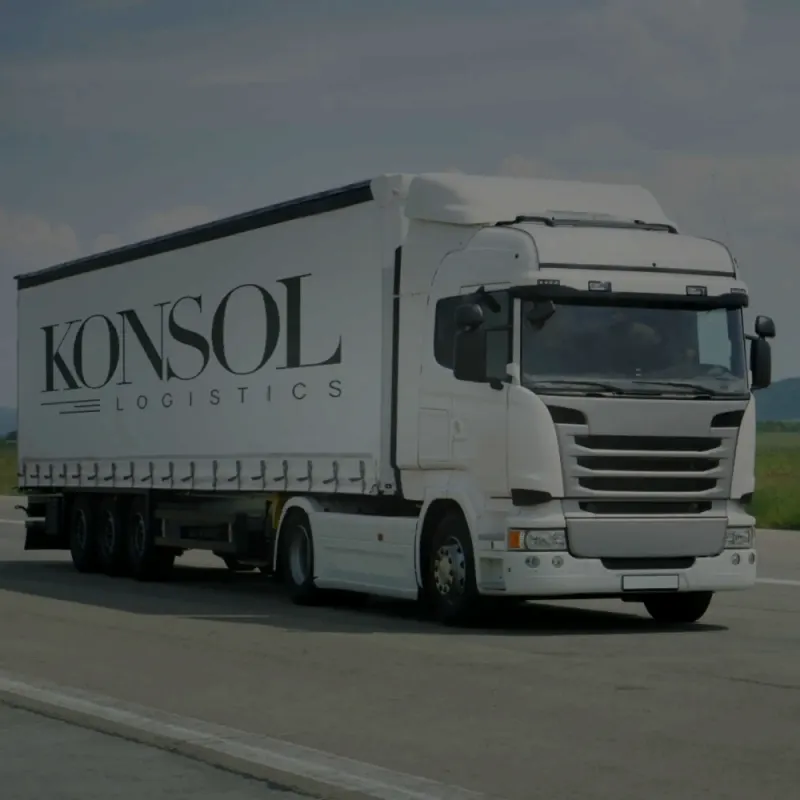
International freight truck on a road freight lane between Europe and the Gulf

Road freight moves your cargo by truck from your door to the address you name, and it lets you shape route and timing more freely than most other modes. Konsol Logistics, a Konya-based logistics company, organises full-truck (FTL) and part-load (LTL) shipments to Europe, the Turkic Republics, the Middle East and the Gulf, and helps you pick the model that suits your cargo's volume, weight and destination.

Service Features

  • Europe, Turkic Republics, Middle East and Gulf lanes
  • Full-truck (FTL) and part-load (LTL) options
  • Shipments to Dubai, Saudi Arabia, Qatar, Kuwait and Bahrain
  • Door-to-door, project and out-of-gauge cargo solutions
  • Operational support on customs and paperwork
  • Cargo tracking and regular updates
  • One-to-one contact with your account representative

When does road freight make sense, and where does it reach?

At sea you worry about cut-off dates; in the air, about volumetric weight. On the road there is often a single question: once the cargo is ready, where does the truck go? Few transshipments, door-to-door service and departures built around your load make trucking strong in nearby markets. Cargo for distant continents and heavy bulk loads, though, usually belongs on a ship.

European routes

Regular, planned departures are the norm here, for textiles, furniture, spare parts and retail consignments. Speed matters, but a complete CMR consignment note and customs documents matter more. What is requested varies by country and product, so confirm it with your customs broker.

Turkic Republics

Lanes towards Azerbaijan, Kazakhstan, Turkmenistan, Uzbekistan and Kyrgyzstan cover long distances and usually more than one border. So the route, each transit country's document rules and your cargo's tolerance for waiting are discussed at the start. Konsol Logistics supports planning through its agent network.

Middle East and Gulf

Border procedures, conformity certificates and delivery-point conditions come to the fore. The Gulf lane has its own section below, country by country, because Dubai and Kuwait share a region but not the same paperwork.

Road Freight to the Middle East and Gulf Countries

We offer economical, dependable and professional road transport from Turkey to Dubai, the United Arab Emirates, Saudi Arabia, Qatar, Kuwait and Bahrain. Konsol Logistics organises international road freight between Turkey and the Middle East and Gulf countries, planning full-truck (FTL) and part-load (LTL) shipments with competitive freight quotes. We weigh volume, weight, loading point and delivery address together, then settle on the most suitable transport model. Our agent network and international logistics experience support your trade on this lane. The notes below are general planning points; they change with the product, the season and each country's rules.

Turkey to Dubai (UAE) road freight

First question: where will the cargo be delivered, a free zone, the mainland or a specific warehouse? The choice can affect the paperwork flow. Confirm the address, the contact person and the unloading conditions before loading day to reduce waiting, and check the invoice, packing list and certificate of origin against the goods one by one.

Turkey to Saudi Arabia road freight

Saudi Arabia is vast, and distance varies enormously by delivery point. For some product groups an import conformity or standards certificate may be requested; which product needs which document depends on the product and the current rule, so verify it with your buyer or customs broker.

Turkey to Qatar road freight

On Qatar-bound loads, the organisation at the delivery end often decides the outcome: unloading permission, a complete address, the receiver's acceptance conditions. When a part-load truck unloads for several consignees, agree the drop sequence beforehand. Documents and conformity requirements depend on the product.

Turkey to Kuwait road freight

Two things save the most time on Kuwait shipments: importer details and document consistency. The consignee's company name, registration data and product description should read identically everywhere. Some products may need an extra permit; check with your customs broker.

Turkey to Bahrain road freight

Bahrain is an island country, and road access relies on a link through a neighbouring country. Planning therefore covers the transit stage and both sides' paperwork, not just the destination. For small volumes, part load (LTL) is often the first option weighed on cost.

FTL or LTL? How to decide based on your cargo

The decision mostly depends on how much of the truck your cargo fills and how urgent it is. The table summarises the general logic; the final choice needs cargo, route and season details.

CriterionFull truck (FTL)Part load (LTL)
Cargo quantityA lot that fills, or nearly fills, the truckA few pallets; small and medium shipments
Cost logicYou pay for the whole vehicleYou pay only for the space you occupy
Loading and transfersLoaded directly, driven directlyCollection, consolidation and waiting steps may apply
Planning flexibilityDate and route built around your cargoDepends on the departure schedule and other loads
Sensitive and high-value goodsLess handling, a more controlled flowMore handling touches, so packaging matters even more
Best-fit scenarioDirect delivery to one consignee; urgent, large shipmentsRegular small shipments where filling a truck does not pay

In practice, a truckload-sized lot, valuable goods and a single consignee point to a full truck; a few pallets and regular, modest shipments point to part load. Paying the whole freight on a half-empty vehicle is rarely better than sharing space with loads going the same way. The trade-off is that part load can involve transfers and waiting, and timing may shift as consignments are consolidated. As volume grows, moving to FTL becomes the natural step.

Expert note: Do not judge how full a truck will be by pallet count alone; height and stackability decide it too. Share dimensions and stacking status at the quote stage and there are no surprises later.

Our service scope on Gulf routes

These are the services we offer on Middle East and Gulf lanes; each is arranged around your cargo and route.

  • Full-truck road transport (FTL): direct shipment on a dedicated vehicle.
  • Part-load road transport (LTL): a shared truck, so you pay for the space you take.
  • Turkey to Dubai road freight: planned shipments to UAE delivery points.
  • Turkey to Saudi Arabia road freight: paperwork suited to delivery point and product.
  • Turkey to Qatar road freight: organisation for full and part loads.
  • Turkey to Kuwait road freight: attention to document consistency and importer details.
  • Turkey to Bahrain road freight: planning that accounts for the transit stage.

Door-to-door, project cargo and cargo-specific solutions

A standard palletised consignment and a machine that strains the transport rules are not planned the same way. Konsol Logistics deals with that difference at the outset.

Door-to-door international transport

Your cargo is collected from your factory or warehouse and delivered to the consignee's address, with loading, paperwork and border steps followed under one coordination. Settle loading day and receiving hours in advance and you avoid the most common snag of all: the dreaded “nobody at the address”.

Project and out-of-gauge cargo

Cargo beyond standard truck dimensions, or needing special equipment, has its own planning: size and weight, handling equipment, transit-country permits and, where required, an escort. Conditions differ by country; a dimensioned drawing and a photo with your enquiry help a great deal.

Solutions by cargo type and delivery point

Fragile goods need special stowage and lashing, temperature-sensitive loads need vehicle conditions agreed separately, and dangerous goods fall under ADR rules. Delivery points differ too: a warehouse dock, a construction site, a shop or a port. Tell us the cargo type and address type so vehicle and paperwork are prepared accordingly.

From request to delivery: road shipment step by step

The process runs roughly as follows; details vary with the cargo and the lane.

  1. Request and quote. In the Quick Quote form you enter the cargo type, quantity, weight, dimensions and the loading and delivery addresses. The form checks the details and prepares a ready-made WhatsApp message, which you send yourself. Your account representative then contacts you one to one.
  2. Planning. The transport model (FTL or LTL), vehicle type, loading date window and route plan are set.
  3. Loading and paperwork. After packaging and label checks the cargo is loaded, and the commercial invoice, packing list and CMR are prepared.
  4. Border and customs. The operations team follows export and import formalities and transit-country documents, with operational support and help preparing paperwork.
  5. Tracking and updates. You receive regular status reports; if a delay looks likely, it is shared and the options are weighed together.
  6. Delivery. The cargo is handed to the consignee and the delivery document is signed; any damage or shortage goes into the first report at unloading.

Checklist before your cargo is loaded

Half of a smooth shipment is decided before loading day. These checks cut out most problems early.

  • Do the commercial invoice, packing list and any certificate of origin agree with each other and with the cargo?
  • Are the consignee's name, address and contact details complete?
  • Is it confirmed whether the product needs a conformity certificate or permit at destination?
  • Are the pallets sturdy, stretch-wrapped and strapped, with edges protected?
  • Are consignee details, piece count and handling marks visible on every carton and pallet?
  • If you use wooden pallets or packaging, does the destination require an ISPM 15 mark?
  • For dangerous goods, are the ADR requirements and correct labels ready?
  • Is it clear who meets the driver on loading day, and which ramp is used?

Expert note: Before the driver arrives on loading day, compare labels and document copies one more time. A different product name or address on a single paper can turn into hours of correspondence at the border; a short comparison usually prevents it.

Looking for a road freight price to the Gulf?

Get in touch about your full or part loads, and we will prepare a competitive quote tailored to your cargo and route. Send your details through the Quick Quote form on the Konsol Logistics website and speak with your account representative one to one.

Frequently asked questions

Full-truck (FTL) and part-load (LTL) road freight is organised to the Gulf region, above all Dubai (UAE), Saudi Arabia, Qatar, Kuwait and Bahrain. Each shipment is planned separately by route, loading point and delivery address.

More questions from our help center

View all questions

Related solution guides

Detailed guide pages on the topics most often asked about together with this service.

See all solutions

Our Other Services

News related to this topic

Call us — (opens in a new tab)